Establishing Your Business; Website and Workspace

Business; Website and Workspace

Whether you’re a solo consultant or a retail giant, a digital home and a physical base are the two non-negotiables that turn a “side hustle” into a legitimate entity.

Today, these aren’t just places where you work; they are the foundation of your brand authority. Here is the breakdown of why these two pillars are your first priority.

1. The Website: Your 24/7 Global Ambassador

Think of your website as your Master Salesman. It never sleeps, never takes a holiday, and is often the very first impression a customer has of you.

  • Proof of Legitimacy: In today’s market, if you don’t have a website, you don’t exist in the eyes of the consumer. A social media page is “rented land”; a website is land you own.

  • The Conversion Hub: This is where the magic happens—where a curious browser turns into a paying customer via a checkout page, a booking calendar, or a contact form.

  • Data Sovereignty: Your website allows you to track exactly how people find you, what they look at, and why they leave. You can’t get that level of granular data from a physical storefront alone.

2. The Location: Your Operational Engine

Whether it’s a spare bedroom or a downtown office, your physical location dictates your workflow and overhead.

Option A: Home-Based (The Lean Start)

  • Low Risk: You eliminate the #1 killer of small businesses: High Rent.

  • Tax Efficiency: You can often deduct a portion of your home expenses (utilities, internet, square footage) from your business taxes.

  • The Challenge: You must be disciplined about “Work-Life Separation.” If your desk is your kitchen table, your brain never truly leaves the office.

Option B: Commercial Location (The Growth Move)

  • Visibility: You get “passive marketing” just from people walking or driving by.

  • Professionalism: It’s easier to host high-level clients or manage a team in a dedicated professional environment.

  • The Challenge: High fixed costs. You need a validated customer base before signing a multi-year lease.

The “Launch” Checklist: Foundations First

Step Action Item Why it Matters
1. Domain Secure your .com or .ai name. This is your digital real estate.
2. Licensing Check local zoning for home/commercial use. Avoid “unexpected” fines from the city.
3. Infrastructure High-speed internet + Ergonomic setup. Your health and speed are your ROI.
4. Google Business Pin your location (even if home-based). This is how you show up on “Near Me” searches.

The Reality Check

You can have the best product in the world, but if your website is broken or your location is disorganized, you are essentially building a house on sand.

Expert Insight: Start with the minimum viable version of both. A clean, one-page website and an organized corner of your home are better than a fancy office and a complex site that you can’t afford to maintain.
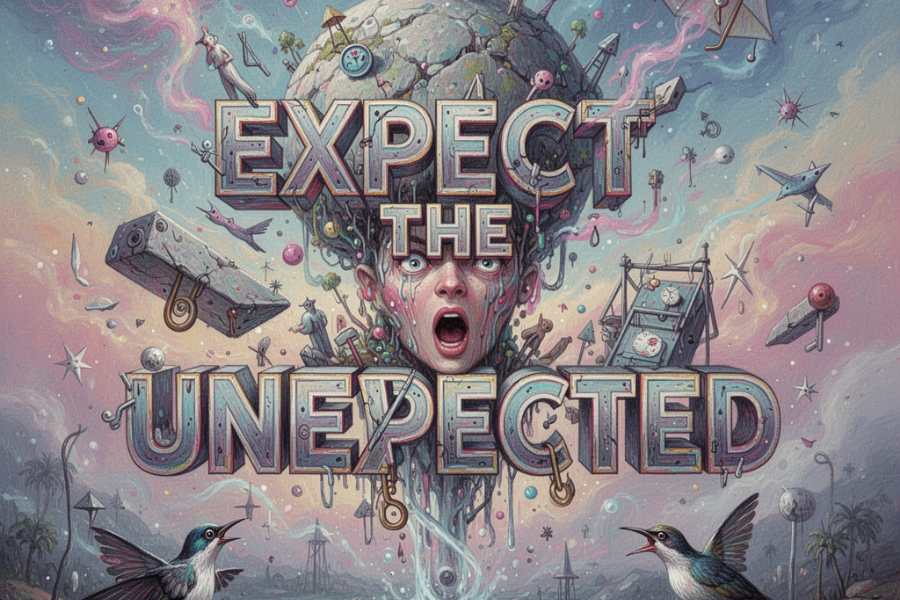
Learn to Expect the Unexpected

Expect the Unexpected

That is the unofficial motto of every successful entrepreneur. In business, “the unexpected” isn’t a glitch in the system—it is the system.

Whether it’s a sudden shift in the economy, a competitor launching a surprise feature, or a global supply chain hiccup, your ability to pivot defines your longevity. Here is how to move from just “expecting” chaos to actually building a business that thrives on it.

1. Build “Anti-Fragile” Systems

Author Nassim Taleb coined the term Antifragile to describe things that don’t just withstand shocks, but actually get better because of them.

  • Diversify Revenue: Never rely on one “whale” client. If one customer makes up more than 20% of your revenue, you aren’t an owner; you’re an employee who can be fired at any moment.

  • Multi-Channel Presence: If your entire customer base is on Instagram and the algorithm changes tomorrow, your business “breaks.” Build an email list—it’s the only audience you truly own.

2. The “Pre-Mortem” Strategy

Instead of waiting for things to go wrong, conduct a Pre-Mortem.

  • The Exercise: Imagine it is one year from today and your business has completely failed.

  • The Question: “What happened?”

  • The Result: By visualizing the failure (tech crash, bad hire, legal issue), you can build safeguards now to prevent those specific “unexpected” events.

3. Financial Optionality (The “Peace of Mind” Fund)

Cash is the ultimate shock absorber. In 2026, the cost of borrowing can fluctuate wildly.

  • The 6-Month Rule: Aim for at least six months of operating expenses in highly liquid accounts.

  • The “Pivot Fund”: Keep a small percentage of profit set aside specifically for “unplanned opportunities”—like a competitor going out of business or a sudden new software that could double your efficiency.

4. Cultivate “Decision Velocity”

When the unexpected hits, the biggest killer isn’t the problem itself—it’s indecision.

  • Agile Culture: If you have a team, empower them to make small decisions without a board meeting.

  • The 70% Rule: If you have 70% of the information you need, make the call. Waiting for 100% certainty is just a fancy way of being too late.

Mindset Shift: The “OODA” Loop (Observe, Orient, Decide, Act)

Developed by military strategist John Boyd, this is how you handle rapidly changing environments:

Step Action Business Application
Observe Gather raw data. “Sales dropped 15% this week.”
Orient Filter the data. “Is it the economy, or is our website broken?”
Decide Form a hypothesis. “It’s the checkout page; let’s fix the UI.”
Act Test the decision. “Patch the site and monitor for 24 hours.”

Reframing the Chaos: Every “unexpected” disaster is also an unexpected opportunity. When the market shakes, the businesses built on sand fall over, leaving more room for those built on rock.

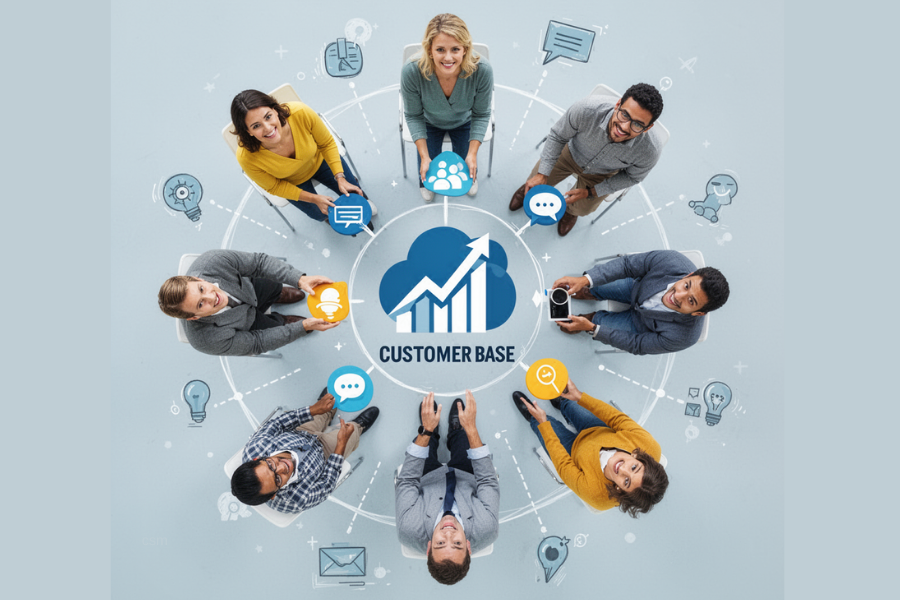
How to Build a Customer Base

How to Build a Customer Base

Building a customer base today is less about “shouting the loudest” and more about precision and trust. With AI-driven search and highly skeptical consumers, you need a strategy that moves fast but stays human.

Here is a blueprint for building a customer base from zero to scale.

Phase 1: The “First 25” (The Manual Grind)

Before you automate, you must validate. Today, the fastest way to get your first customers is through high-intent, low-scale actions.

  • The “Niche-Down” Offer: Don’t sell “Marketing Services.” Sell “Lead Generation for Sustainable Fashion Brands.” A hyper-specific offer cuts through the noise instantly.

  • The “Proof of Work” Strategy: Instead of a cold pitch, send a “Value Gift.” For example, if you are a web designer, send a screen recording of a 2-minute audit of a prospect’s current site.

  • Borrow Trust: Partner with “Ecosystem Anchors”—businesses that already have your customers but aren’t competitors. A local gym and a healthy meal-prep service are perfect partners.

Phase 2: Acquisition (Turning on the Tap)

Once you have proof that people want your product, use these modern channels to scale:

  • Short-Form Video (The Hook): These days, video is the primary way people “discover” brands. Use TikTok or Instagram Reels not for ads, but to show behind-the-scenes and customer transformations.

  • AI-Enhanced SEO: Traditional keywords are dead. Optimize for “Answer Engine Optimization” (AEO). Focus on long-tail conversational questions that AI bots (like Gemini or ChatGPT) use to cite sources.

  • The “Lead Magnet” 2.0: E-books are out; interactive tools are in. Offer a free calculator, a mini-audit tool, or a “Project Template” in exchange for an email.

Phase 3: Retention (Building the “Moat”)

Acquiring a customer is expensive; keeping one is where the profit is.

  • Hyper-Personalization: Use first-party data (info they gave you directly) to send “Nudge” emails. Instead of “We miss you,” send “We noticed you haven’t used [Feature X] in 10 days; here is a 30-second video on how it saves you time.”

  • Gamified Loyalty: Move beyond “Buy 10, Get 1 Free.” Create tiers (Silver, Gold, VIP) and offer experiential rewards, like early access to new products or “Member-Only” Q&A sessions.

  • Community over Audience: An audience listens to you; a community talks to each other. Use platforms like Discord or specialized forums to let your customers connect. When they help each other, they become “sticky” to your brand.

Comparison: 2022 vs. 2026 Strategy

Feature Old Way (2022) New Way (2026)
Ads Mass targeting / Broad reach Hyper-niche / AI-targeted
Content High volume (Daily blogging) High Value (In-depth, AI-proof)
Trust Five-star reviews Video testimonials & Case studies
Email Weekly newsletters Behavior-triggered “Nudges”

The “Golden Rule” for 2026: If your marketing feels like a robot wrote it, a human will ignore it. Use AI to do the data heavy lifting, but keep your brand’s voice personal and “unpolished.”

Marketing Expert Roadmap: Skills and Strategy

Marketing Skills and Strategy

Becoming a marketing expert isn’t about memorizing a single textbook; it’s about mastering the intersection of human psychology, data analysis, and creative storytelling. Since the landscape shifts faster than a viral TikTok trend, you need a mix of foundational theory and hands-on experimentation.

Here is a roadmap to move from a beginner to a high-level strategist.

1. Build a “T-Shaped” Skill Set

The most successful marketers are “T-Shaped.” This means you have a broad understanding of many disciplines (the top of the T) and deep expertise in one or two specific areas (the stem of the T).

  • Breadth (General Knowledge): SEO, Content Marketing, PPC (Paid Ads), Email Marketing, Social Media, and PR.

  • Depth (Specialization): Pick one to master first. For example, becoming the person who knows Conversion Rate Optimization (CRO) better than anyone else.

2. Master the Fundamentals (The “Why”)

Before touching a Facebook Ad Manager dashboard, you must understand the “evergreens” of marketing:

  • Psychology: Read up on persuasion triggers and consumer behavior. Why do people buy?

  • Copywriting: This is the most undervalued skill. If you can write words that sell, you will always be in demand.

  • Segmentation & Targeting: Learning how to identify a “Persona” is the difference between a surgical strike and shouting into a void.

3. Get Your Hands Dirty (The “How”)

Theory is great, but marketing is a “proof of work” industry.

  • Start a Side Project: Launch a blog, an e-commerce store, or a niche newsletter. Spending $50 of your own money on ads to see what happens is worth more than a $5,000 certificate.

  • Get Certified: While not strictly required, these provide a structured path:

    • Google Analytics 4 (GA4): To understand data.

    • HubSpot Academy: For inbound marketing.

    • Meta Blueprint: For social media advertising.

4. Learn to Love the Data

Marketing used to be purely “vibes” and billboards. Today, it’s math.

  • The Basics: Learn what $ROI$, $CAC$ (Customer Acquisition Cost), and $LTV$ (Lifetime Value) mean.

  • Testing: Become obsessed with A/B testing. Never assume you know which headline will work—let the audience tell you through their clicks.

5. Stay Ahead of the Curve

The tools change, but the principles don’t. To stay an “expert” in 2026:

  • AI Integration: Learn how to use LLMs for research, content drafting, and data synthesis.

  • Network: Join communities (like Demand Curve or Exit Five) to see what’s working for others in real-time.

Comparison: Generalist vs. Specialist

Feature Generalist (Jack of all trades) Specialist (The Expert)
Best For Startups / Marketing Managers Agencies / High-level Consulting
Pros Understands the “Big Picture” Command higher rates for specific results
Cons Can be “master of none” Risk of niche becoming obsolete

Pro Tip: Don’t just follow the “gurus.” Follow the data. The best marketers are usually the ones quietly testing things in the background, not the ones shouting about “one weird trick” on your feed.

Social Media Growth Strategies

Social Media Growth Strategies

Gaining followers has shifted from “going viral” to building a niche community. Algorithms across TikTok, Instagram, and LinkedIn now prioritize “watch time” and “shares” over raw follower counts, meaning your content needs to provide immediate value to be discovered.

Here is the blueprint for growing your social media presence today.

1. Master the “Search-First” Strategy (Social SEO)

Social media platforms are now used like search engines. To get discovered by people who don’t follow you yet, you must optimize for Social SEO.

  • Keyword-Rich Captions: Don’t just use emojis. Write captions that include keywords your audience is actually searching for (e.g., “Best ways to bake sourdough” instead of “Sunday morning vibes”).

  • On-Screen Text: The algorithm “reads” the text on your videos. Use clear, bold headers that hook the viewer in the first 2 seconds.

  • Spoken Keywords: Say your main topic out loud in the video. AI-driven transcripts help platforms categorize your content for the right viewers.

2. Leverage High-Engagement Formats

Not all posts are created equal. Certain formats are “algorithm favorites” because they keep users on the app longer.

  • Vertical Short-Form Video: Reels, TikToks, and YouTube Shorts remain the #1 growth engine. Focus on “Watch Time”—if someone watches your video twice, the algorithm will push it to thousands more.

  • Educational Carousels: On Instagram and LinkedIn, multi-slide posts are making a comeback. They encourage “Saves,” which is the highest-weighted engagement metric for growth.

  • The “Human” Touch: “Raw” and spontaneous content (behind-the-scenes, unpolished updates) is currently outperforming highly produced ads. People follow people, not logos.

3. Platform-Specific Growth Tactics

Each site requires a slightly different “vibe” to attract followers:

Platform Growth Secret for 2026
Instagram Focus on Shares. Create content that someone would want to send to a friend via DM.
TikTok Niche Consistency. If you post about 5 different topics, the algorithm won’t know who to show you to. Stick to one lane.
LinkedIn Personal Authority. Personal profiles get 5–10x more reach than company pages. Share “lessons learned” or industry takes.
Threads Reply-First Strategy. Growing here is about being the first to leave a thoughtful, witty comment on a large account’s post.

4. Community Over Content

The fastest way to grow is to make your current followers feel seen so they become your “street team.”

  • The First Hour Rule: Respond to every comment within the first 60 minutes of posting. This tells the algorithm the post is generating a “conversation,” not just a “broadcast.”

  • User-Generated Content (UGC): Share photos or videos from your followers. It builds massive trust and encourages others to tag you so they can be featured too.

  • Collaborations: Partner with “Micro-influencers” (1k–10k followers) in your niche. Their audiences are often more loyal and likely to follow you than a celebrity’s audience.


5 Rules of Social Media Engagement

5 Rules of Social Media Engagement

Social media is the place to talk with clients about your brand, neighborhood expertise, and insights into the current and future real estate market. With more than 5 billion social media users worldwide ( 63.9% of the global population), according to the Global Social Media Users Statistics 2025, published in partnership with Hootsuite, it’s important to know the rules of engagement for growing your following—and thus, your business.

  1. Respond quickly to all direct messages you receive on all social media platforms. Think of them as live chats. Clients and prospects expect a same-day response, or else they’ll move on to the next agent or broker.
  2. When advertising on social media, make sure to set specific, timely goals. Measuring these goals can help you justify or recalibrate your ad budget. Track your ad growth using each platform’s specific analytics tools, such as clicks, shares, likely sales, etc.
  3. Use a social media calendar to plan your posts. If you have a team member who’s responsible for social media management, make him or her accountable to the calendar. Alternatively, you could automate your posts, which can save you time and help you target optimal user browsing times. But be careful: Automation can be a drag on authenticity.
  4. Make sure your content, voice, and tone are distinctive. While this can include slang when appropriate, limit the usage of such words so as not to undermine your professionalism. To be a standout on social media, know what your competitors are sharing on their channels and fill a void their content doesn’t. Also, consider using social media channels your competitors aren’t. You can own a platform they’re not using.
  5. Make sure your social profiles are consistent and your user names, images, copy, links, photos, and videos match across all platforms. Plus, every one of your profiles should link back to your website.

Source: magazine.realtor ~ By: Tim and Julie Harris ~ Image: Canva Pro

How to Learn Performance Marketing; 30-day Learning Curriculum

Since marketing is the most versatile skill for a entrepriner (and pays incredibly well), let’s focus on Performance Marketing (Paid Ads & Analytics). This 30-day “bootcamp” will take you from “I don’t know where the money goes” to “I can run a profitable campaign.”

Phase 1: The Fundamentals (Days 1–7)

Goal: Understand the psychology of why people click and the math behind the money.

Days 1-2: The Marketing Funnel. Learn the difference between TOFU (Top of Funnel/Awareness), MOFU (Consideration), and BOFU (Conversion).

Days 3-4: Direct Response Copywriting. Read The Boron Letters (free online) or watch videos on the “AIDA” formula (Attention, Interest, Desire, Action).

Days 5-7: Basic Metrics Math. You must understand these formulas inside and out:

Phase 2: Platform Mastery (Days 8–18)

Goal: Get certified. This is where you learn the “buttons” of the cockpit.

Phase 3: The “Sandbox” & Implementation (Days 19–25)

Goal: Build something real.

  • Days 19-21: Landing Page Design. Learn how to build a simple page using tools like Carrd, Unbounce, or Canva. A great ad is wasted on a bad website.

  • Days 22-25: Tracking & Analytics. Set up a Google Analytics 4 (GA4) account. Learn how to track where a user came from and what they did on your page.

Phase 4: Strategy & Optimization (Days 26–30)

Goal: Thinking like an expert.

  • Day 26-27: A/B Testing. Learn how to test one variable at a time (e.g., changing just the headline) to see which performs better.

  • Day 28-29: Competitive Research. Use tools like the Meta Ad Library to look at what brands like Nike or Airbnb are actually running for ads right now. Reverse-engineer their strategy.

  • Day 30: The Portfolio Build. Summarize everything you’ve learned into a “Mock Case Study.” Show what ads you would run for a specific brand and why.


Week Focus Core Task
1 Theory Write 5 different ad headlines for a product you love.
2 Technical Get your first official platform certification.
3 Creation Build a mock landing page and install a tracking pixel.
4 Analysis Audit a “bad” ad you see on your feed and explain how to fix it.


Building Your Business Website: A Guide

Building Your Business Website: A Guide

Building a business website is an exciting move! A website is essentially your digital storefront—it’s where your first impressions are made and where most of your sales will eventually happen.

To get you moving in the right direction, let’s break the process down into manageable phases.

Platform Best For… Pros
WordPress.org Customization & SEO Massive flexibility and ownership, but higher learning curve.
Shopify Product Sales The gold standard for eCommerce and inventory management.
Wix / Squarespace Beginners & Creatives Drag-and-drop, beautiful templates, all-in-one hosting.

Phase 1: The Strategy (The “Why”)

Before you drag a single text box or write a line of code, you need clarity on your goals.

    • Define the Goal: Is this for lead generation, selling products directly (eCommerce), or just a digital business card for credibility?

    • Identify Your Audience: Who are they, and what problem of theirs are you solving?

    • The “Call to Action” (CTA): What is the one thing you want visitors to do? (e.g., “Book a Consultation,” “Buy Now,” or “Sign up for our Newsletter.”)

    • Phase 2: Choosing Your Platform: You don’t need to be a developer to build a great site anymore. Here are the three most common paths:

Phase 3: The Essential Pages

Every business site should have these core elements to build trust:

    1. Home Page: A clear headline explaining what you do in 5 seconds or less.

    2. About Us: The story behind the business—humanize the brand.

    3. Services/Products: Clear descriptions with high-quality images.

    4. Social Proof: Testimonials, reviews, or case studies.

    5. Contact: A simple form, email, or physical address.

Phase 4: Launch & Maintenance

Building it is only half the battle. To actually get “promoted,” keep these in mind:

    • Mobile Optimization: More than half of your traffic will likely be on a phone. Make sure it looks good on a small screen!

    • SEO (Search Engine Optimization): Use keywords your customers are searching for so Google can find you.

    • Analytics: Install Google Analytics (or use your platform’s built-in tools) to see where your visitors are coming from.


Quick Tip: Avoid “Coming Soon” pages if you can help it. Even a single-page “Landing Page” with your contact info is better than a blank site while you build the rest.

Building Your Business Dream Team

Building Your Business Dream Team

Building a business is rarely a solo sport. The “right” people aren’t just talented individuals; they are pieces of a puzzle that, when assembled, create a complete picture of operational excellence and strategic growth.

Here is a breakdown of the essential archetypes you need in your inner circle to thrive.

1. The Strategic Core

These are the people who help you steer the ship. They provide the balance between “big dreams” and “harsh reality.”

  • The Visionary (Likely You): Focuses on the “why” and the long-term future.

  • The Integrator (The COO Type): The person who turns ideas into infrastructure. They focus on the “how” and keep the trains running on time.

  • The Devil’s Advocate: Someone you trust who isn’t afraid to tell you your “brilliant” idea is actually a logistical nightmare. They save you from expensive ego-driven mistakes.

2. The Specialized Experts

You don’t need to know everything, but you need to know the people who do.

Role Why You Need Them
The Financial Architect Beyond basic bookkeeping; they help with tax strategy, cash flow forecasting, and scaling.
The Growth Hacker Someone who understands customer acquisition and how to tell your story in a crowded market.
The Legal Shield A trusted advisor to handle contracts, IP, and compliance before they become lawsuits.

3. The Emotional & Intellectual Support

Running a business is mentally taxing. If your inner circle is only employees, you’ll eventually burn out.

  • The Mentor: Someone who has already been where you are trying to go. They provide the “map” so you don’t hit the same potholes.

  • The Peer Group: A community of other founders. It’s lonely at the top; you need people who understand the unique stress of making payroll.

  • The “North Star” Friend: Someone outside the business world who reminds you of who you are when you aren’t “The Boss.”

How to Audit Your Current Circle

Take a quick look at the five people you spend the most time with professionally:

  1. Do they challenge your thinking? Or do they just nod?

  2. Do they fill your skill gaps? (If you’re a creative, are you surrounded by other creatives, or do you have a “numbers” person nearby?)
  3. Do they have a growth mindset? Cynicism is a virus in a startup environment.

Pro Tip: Hire for character and aptitude over a perfect resume. You can teach a smart, loyal person how to use a CRM, but you can’t teach a high-performer how to care about your company’s mission.

Balance Sheet Example

Balance Sheet: [Your Business Name]

As of December 31, 2025

Assets (What you own) Amount
Current Assets
Cash in Bank $45,000
Accounts Receivable (Commissions Owed) $15,000
Fixed Assets
Office Equipment & Furniture $10,000
Company Vehicle (Net of Depreciation) $30,000
Total Assets $100,000
Liabilities (What you owe)
Current Liabilities
Credit Card Balance $3,000
Short-term Business Loan $12,000
Long-term Liabilities
Vehicle Loan $25,000
Total Liabilities $40,000
Equity (Your Value)
Owner’s Investment $50,000
Retained Earnings (Profit kept in business) $10,000
Total Equity $60,000
Total Liabilities & Equity $100,000